
On this page
Agent use cases
An agent's job continues beyond answering a question: it may need to verify access, read your system, request a change or hand the person to your team. These examples show how to build those steps and check their results in Cumulus.
The businesses and records are fictional. Your team supplies the business rules, endpoints and credentials; replace api.example.com with your services.
Order support and refund review
A customer calls about an order. The agent verifies access, finds out whether they need an invoice explanation, replacement or refund, and follows the appropriate policy. A refund requires eligibility and the customer's confirmation before the agent requests it.
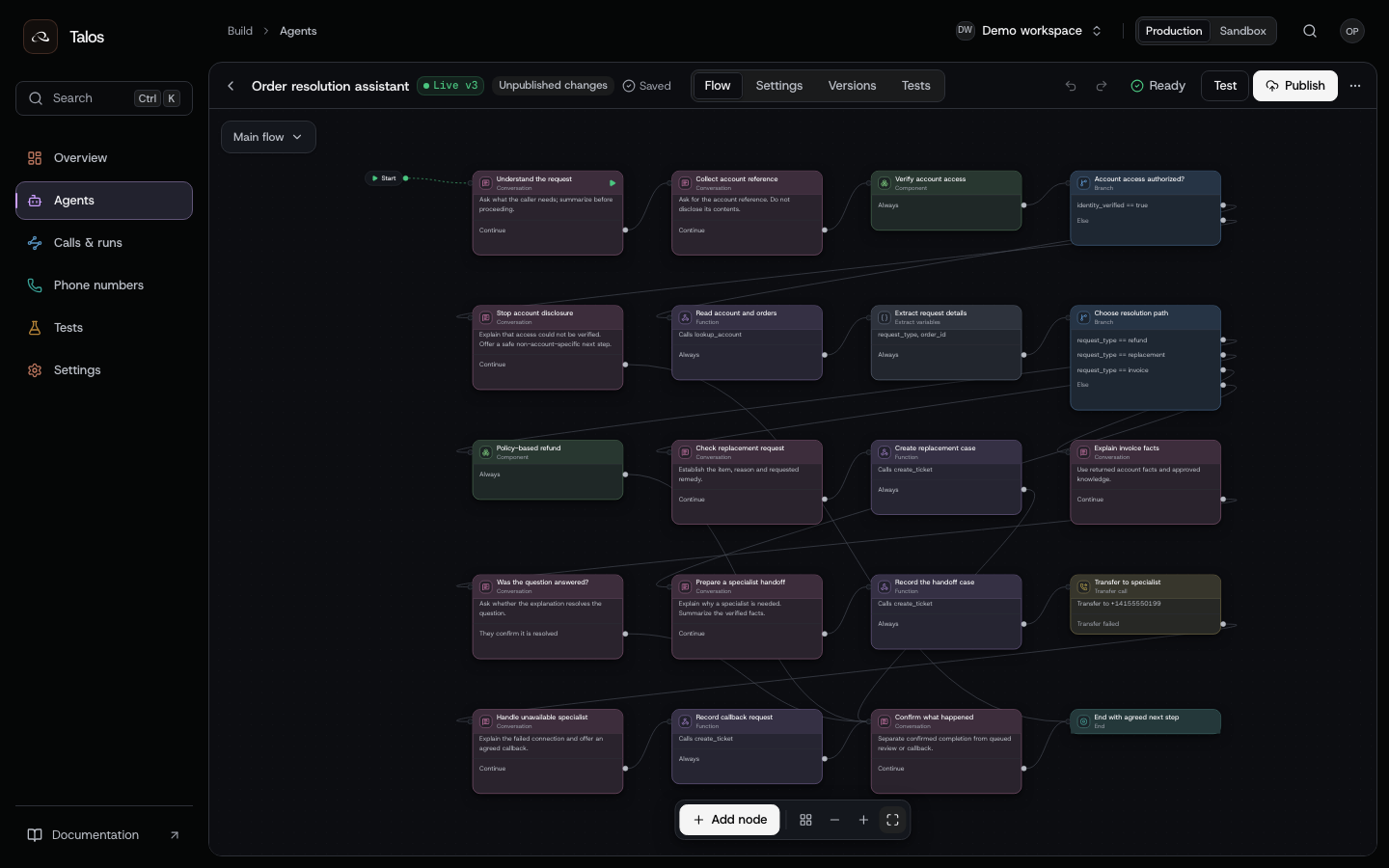
Build the order-support workflow to connect account lookup, approved policy and refund actions. The guide also shows what to do when a refund result is unclear or a specialist cannot connect.
Qualification and appointment booking
A prospective customer has requested a consultation. The agent asks about their needs, routes specialist requests and offers times from your calendar. It confirms the agreed details before requesting a reservation, then records the appointment or the follow-up needed.
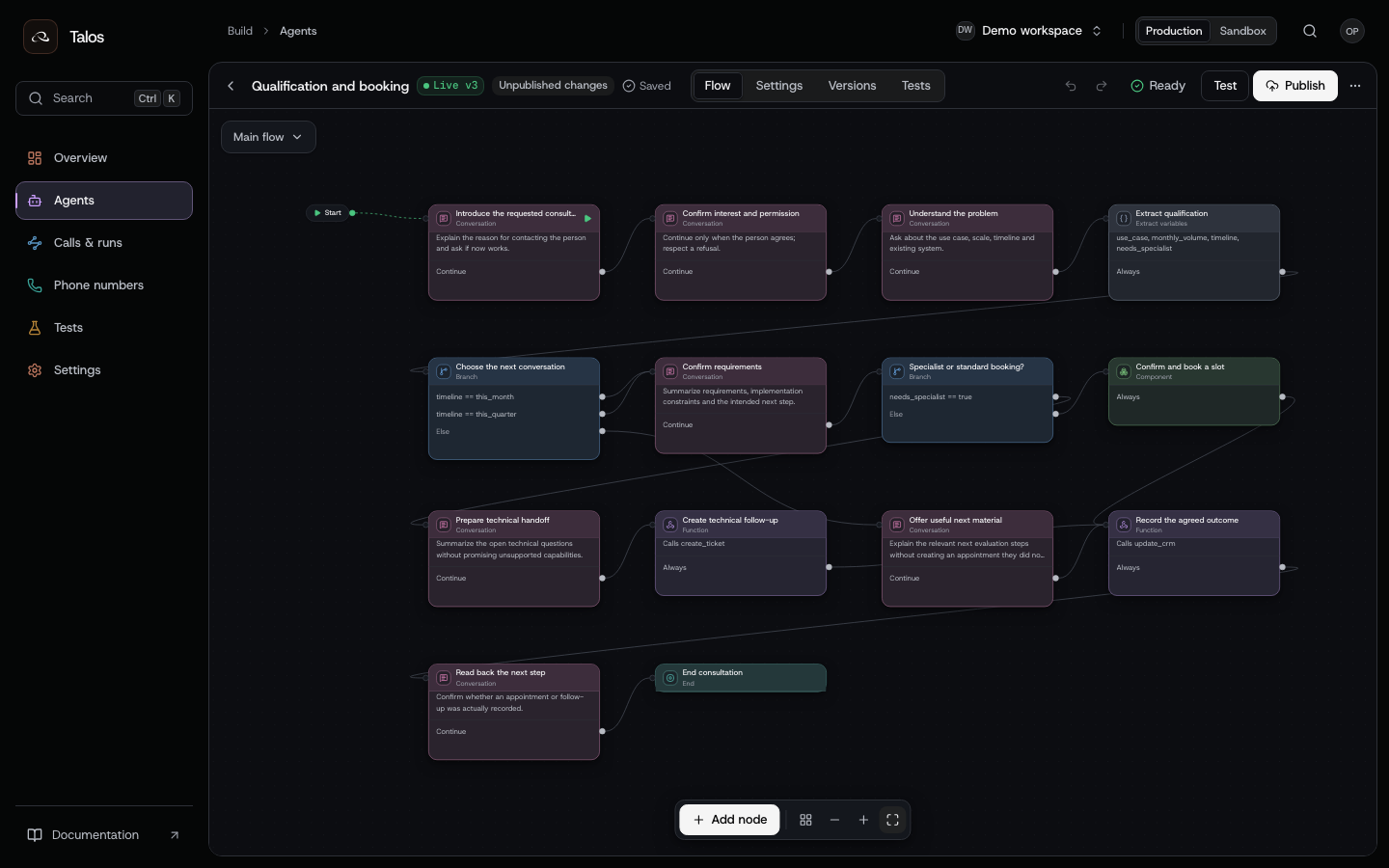
Build the qualification and booking workflow to connect discovery, calendar availability, confirmation and CRM updates.
Equipment service and dispatch
Alex manages a warehouse where the loading-bay equipment has stopped working. Acme Equipment Care calls to arrange help. Alex can book a technician, ask for dispatch or request follow-up.
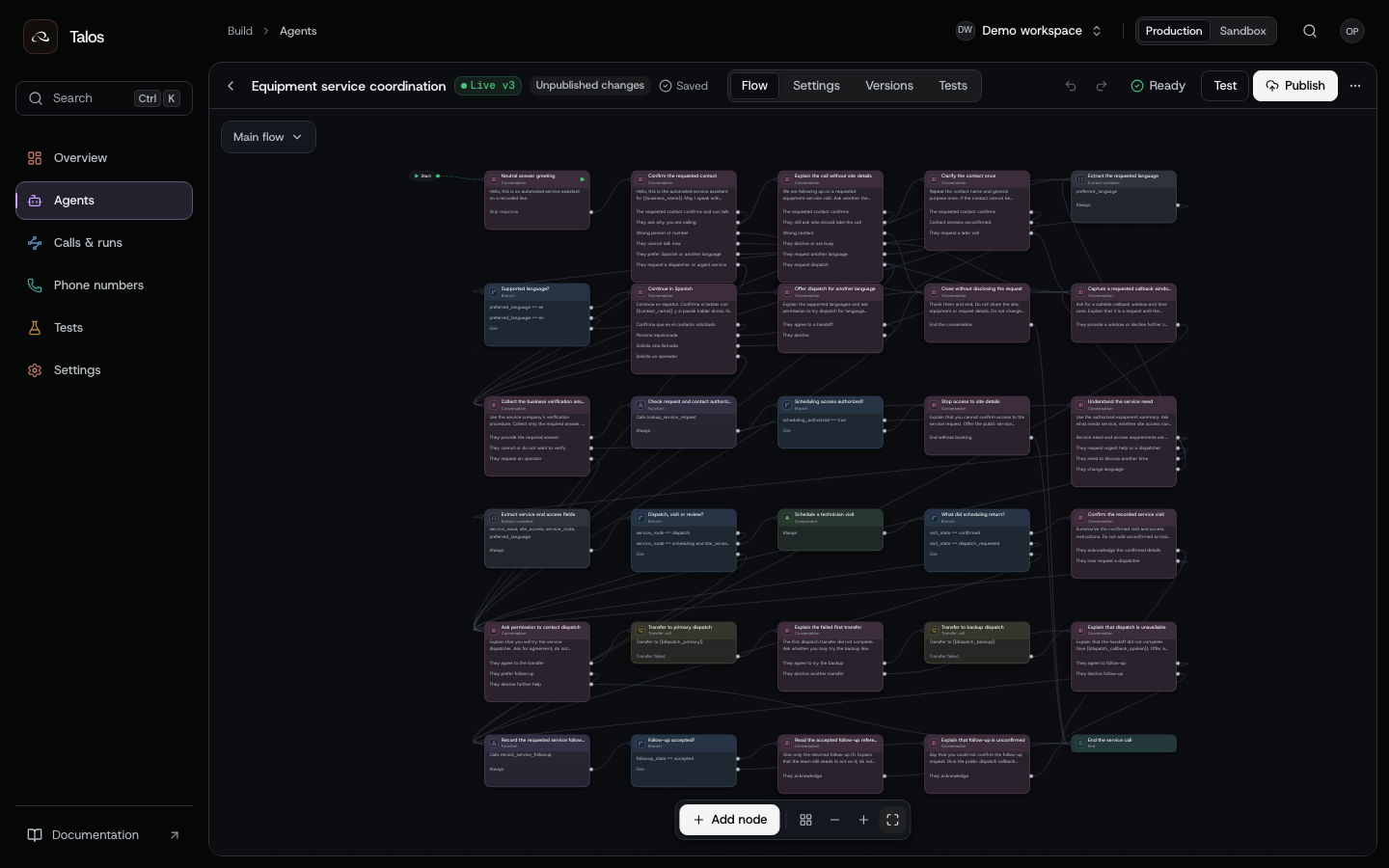
Build the equipment-service workflow to handle those choices in Studio. Open the booking component and connect scheduling actions; the illustrated dispatch call shows how to inspect a busy primary and connected backup rather than a fresh V2 acceptance result. The guide includes an authoring template you can adapt.
After-call cloud operations
A call ends with work still to do. A cloud agent receives selected fields from the phone run, checks the business outcome, updates your system and returns a structured result. A scheduled path can review a separate queue of unresolved requests.
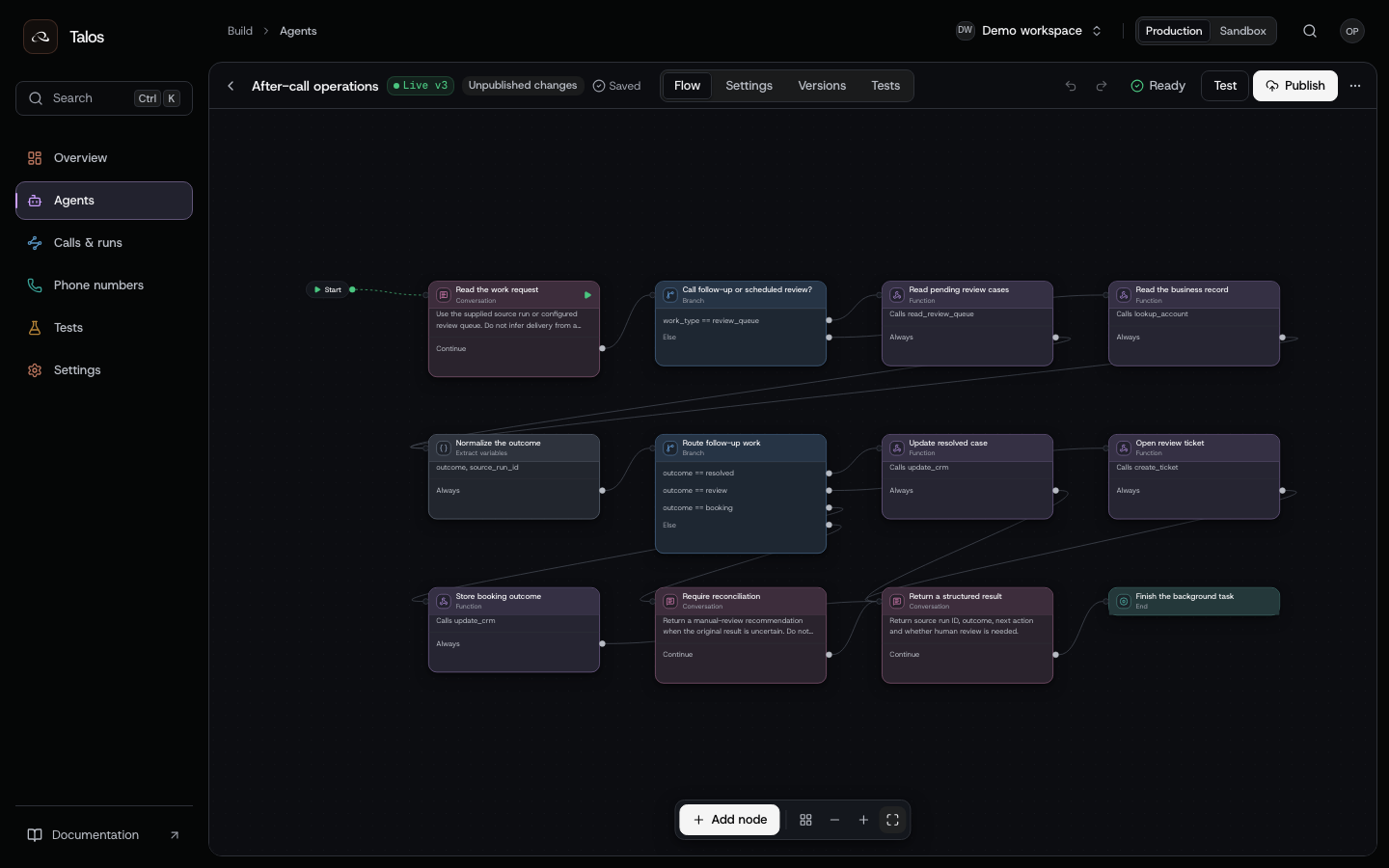
Build the after-call workflow to configure source-field mappings, business actions, scheduled input and result schemas.
Review what happened
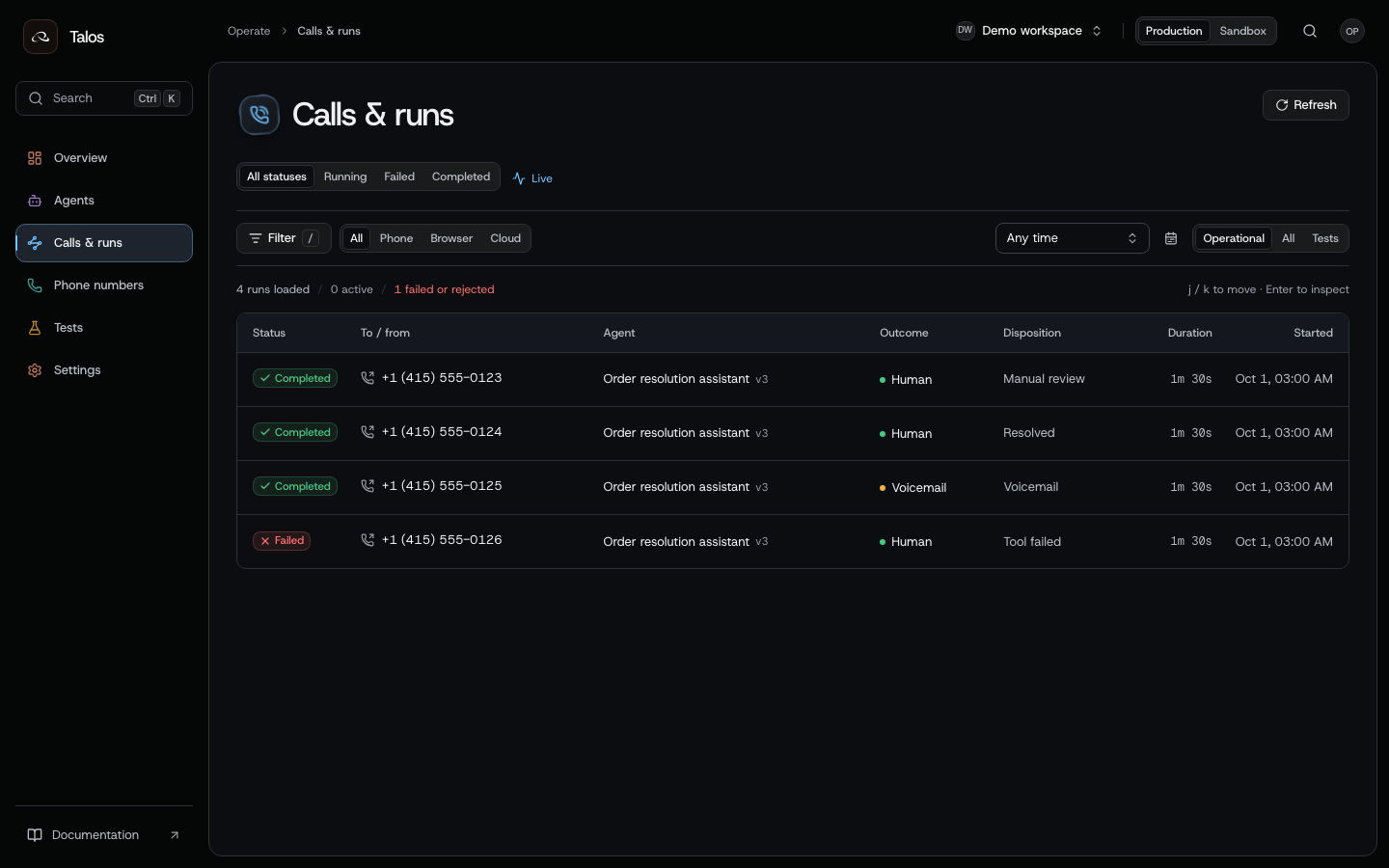
Investigate a run to read the conversation, follow the executed path and inspect action receipts. Use the business response to determine whether a refund, booking or handoff completed; the call's final state alone does not answer that question.
Test and release a change
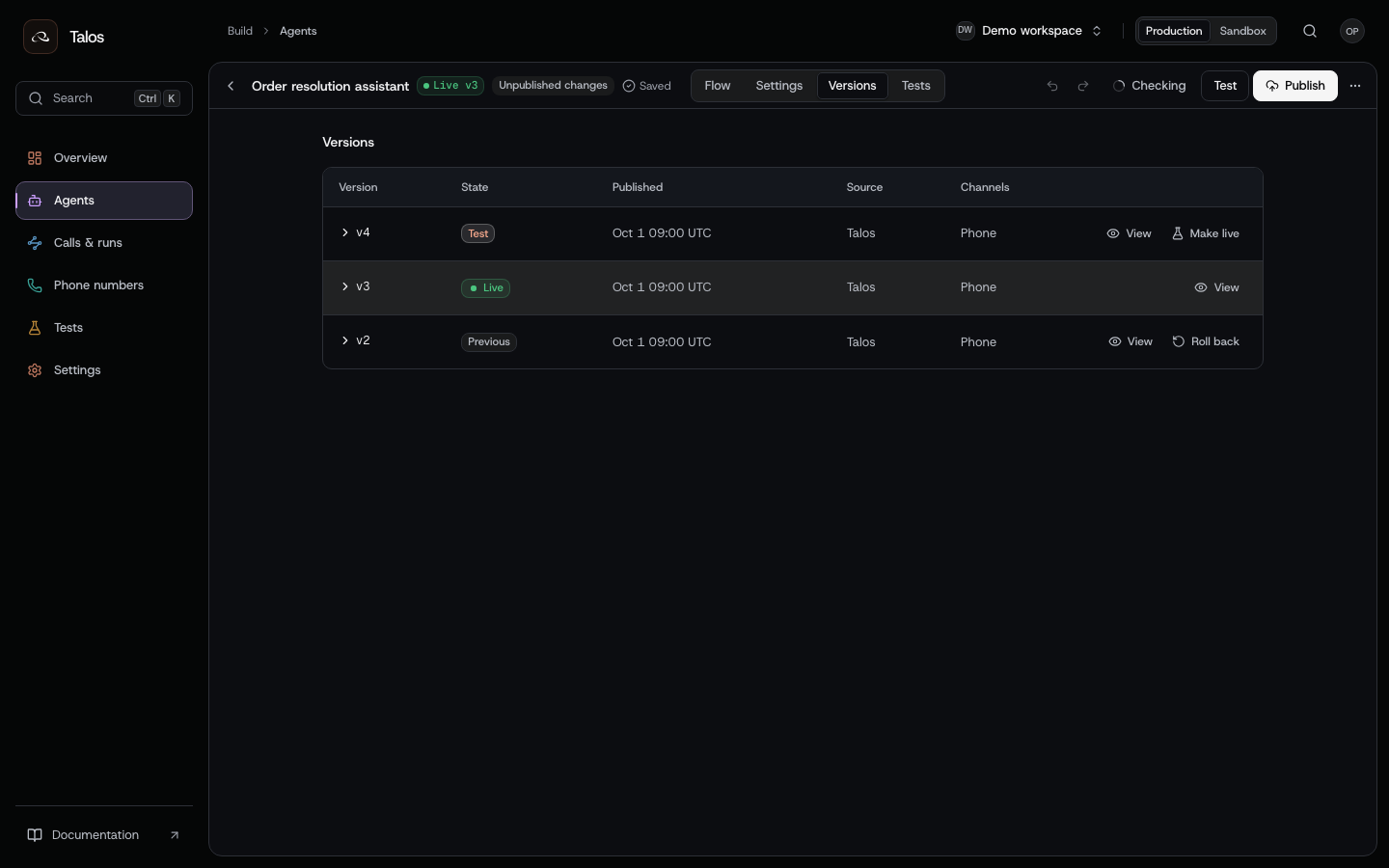
Release an agent to publish a candidate, run repeatable cases, compare a failed trial with its baseline and release the reviewed graph for ordinary execution.
Connect your systems
For the business access check below, your endpoint decides whether the caller may see the record. If you need verification through a private telephone keypad, use the private verification workflow instead of collecting sensitive answers in the conversation.
| You configure | Cumulus provides |
|---|---|
| Verification, eligibility and escalation rules | A flow editor, reusable components and versioned publications |
| Business endpoints, credentials and idempotency contracts | Named HTTP actions and run-linked attempts and receipts |
| Approved documents and expected behavior | Searchable knowledge, saved caller cases, mock tool responses and test results |
| Phone targets, numbers and carrier trunk | Phone execution, browser voice testing and call review |
| Follow-up logic and result fields | Cloud tasks, schedules and run-event triggers for configured environments |
See Choose your platform to compare development and operating responsibilities.